Second HyPT Distinguished Webinar
Learn about hydrogen from world leaders
Here is the Zoom link for the webinar: Second HyPT Distinguished Webinar November 19, 2025 at 15:00 GMT
A 60-minute event free to all
The Global Hydrogen Production Technologies (HyPT) Center, an international partnership jointly funded by Australia, Canada, UK, and US, cordially invites you to our distinguished webinar. The event will be held on Zoom, free to all. It will consist of two distinguished speakers and a panel session.
For the second webinar, the two speakers and two HyPT panelists are:

Prof. Laurent Fulcheri, Mines Paris – PSL University
Prof. Laurent Fulcheri is the Directeur de Recherche of Centre Procédés, Energies Renouvelables, et Systems Energetiques at Mines Paris-PSL. His research focuses on the development of thermal and non-thermal plasma processes for energy transition. He has been working for more than 30 years on plasma pyrolysis of methane for the co-production of decarbonized hydrogen and nanostructured solid carbon. He contributed in 2012 to the creation of a start-up in the US, Monolith. Since then, he has been accompanying the development of Monolith with continuous R&D efforts. He was awarded the Laurent Fulcheri Prize for transformative innovation by Monolith in 2021 and the Carnot Prize in 2023.
Presentation Title: Thermal Plasma Methane Pyrolysis: A 30+ Year Journey Shaping the Future of Industry
In this webinar, we will report a 30+ year research journey on thermal plasma pyrolysis of methane which has led to the emergence of a new, environmentally friendly, and disruptive process to produce decarbonized hydrogen and carbon black. After a brief introduction stating the benefits of plasma methane pyrolysis in the energy transition context and history, a discussion on the state of the art, scientific challenges, and main achievements will be given.

Prof. Douglas Wallace, Dalhousie University
Prof. Douglas Wallace is a Canada Excellence Research Chair as well as a Tier 1 Canada Research Chair in Ocean Science and Technology at Dalhousie University. He is a Fellow of the Royal Society of Canada’s Academy of Science, and has co-authored over 150 peer-reviewed publications. He spent more than a decade at the Brookhaven National Laboratory in the US. Prior to his appointment at Dalhousie in 2011, he was professor of marine chemistry at the Helmholtz Centre for Ocean Research Kiel in Germany, where he served as deputy director and head of the Marine Biogeochemistry Research Division. Dr. Wallace has contributed to building a number of multidisciplinary research teams and programs in the US, Germany, Europe, West Africa, and Canada. His research focuses on the ocean carbon cycle and air-sea exchange of gases as well as climate solutions that involve the oceans.
Presentation Title: The Potential of Oxygen from Green Hydrogen Production to Mitigate Coastal Hypoxia: Could We and Should We?
The concentration of dissolved oxygen is critical for life below water. Human activities, both direct and indirect, are leading to widespread decreases of oxygen in both the open ocean and coastal waters. Model projections suggest that the impact of oxygen loss coupled with warming on marine ecosystems could be as dramatic as that of fishing by the end of this century, unless greenhouse gas emissions are curbed. Large regions of the coastal ocean are at risk and conventional measures for marine protection are ineffectual in the face of this threat. A green hydrogen industry would offer potential to generate large quantities of oxygen in coastal regions that would make mitigation of ocean deoxygenation feasible at regional scales. This has been demonstrated, in principle, for the threatened Estuary and Gulf of St. Lawrence in eastern Canada. Nevertheless, many complex environmental, technical, ethical, and economic considerations are raised by this opportunity that will likely require thorough, independent pilot studies with community involvement. There is likely to be considerable value in the green hydrogen sector working collaboratively with the ocean research community to explore the potential environmental benefit of a new, renewable energy technology.
HyPT Panelists

Prof. Viola Birss, University of Calgary
Prof. Viola Birss is a Professor of Chemistry, Co-Lead of HyPT’s electrolysis theme, the Scientific Director of Calgary Advanced Energy Storage/Conversion group, and the founder of two start-ups. Her research focuses on electrocatalysis, electrolysis of water and/or CO₂, and nanomaterial development.
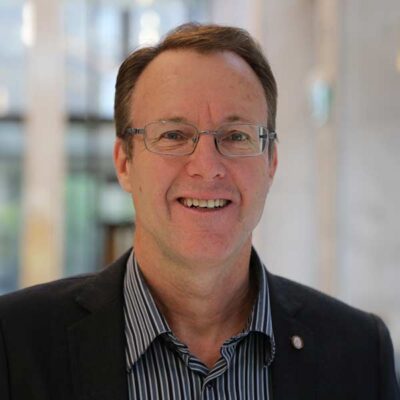
Prof. Murray Thomson, University of Toronto
Prof. Murray Thomson is a professor in Mechanical & Industrial Engineering, the Canada National Director and Lead of the methane pyrolysis theme of HyPT, and Co-founder of Aurora Hydrogen. Dr. Thomson’s research is in the area of methane pyrolysis, hydrogen production and carbon material synthesis.