Third HyPT Distinguished Webinar
Learn about hydrogen from world leaders
The webinar took place on April 30, 2026, register here to view the recording: Third HyPT Distinguished Webinar April 30, 2026 at 15:00 GMT
A 60-minute event free to all
For the inaugural webinar, the two speakers and the third panelist are:

Prof. John T. S. Irvine, University of St Andrews
John Irvine is Professor of Chemistry at the University of St Andrews. He has established a significant international research group investigating fundamental electrochemistry, solid state chemistry and materials science addressing critical energy problems. He has received a number of national and international awards, including the 2016 Schönbeim gold medal from the European Fuel Cell Forum, 2015 RSC Sustainable Energy Award, the RSC Materials Chemistry, Bacon and Beilby awards/medals. Since 2012, he has published 10 Nature family papers. He has held senior visiting appointments in the US, Australia and China and is a Thousand Talents professor at Fujian Institute of Research on the Structure of Matter. He was re-elected European Councilor of the International Society for Solid State Ionics in 2015.
Presentation Title: Interfacial Engineering in Solid Oxide Cells
The key technical challenges in solid oxide cells (SOCs) are performance, durability and cost. All three need to be achieved in parallel; however, there are often competitive tensions meaning that e.g. performance is achieved at the expense of durability. The greatest challenge facing SOCs, in both fuel and electrolysis cell modes, is to deliver high, long-lasting electrocatalytic activity while ensuring cost and time-efficient electrode manufacture. Ultimately, this can best be achieved by growing appropriate nanoarchitectures under operationally relevant conditions, rather than through intricate ex situ procedures. Here we look at attempts to nanoengineer this interface to enhance performance and also probe the changes in local structure that relate to activation or ageing during operation. We will present recent results utilizing both exsolution and infiltration chemistries addressing fuel cell and electrolysis operation.

Dr. Shaffiq Jaffer, Formerly TotalEnergies
Dr. Shaffiq Jaffer recently worked with TotalEnergies as Vice President of Corporate Science and Technology Projects in North America. He was engaged across academia, startups, and private research companies, providing consultancy on R&D strategy, road mapping and partnership. He has built research programs across a broad range of areas: development of unconventional and new energy resources, conservation and energy efficiency, materials engineering for energy technologies and electrification of industrial processes. Currently, he consults on the topics of: carbon capture, utilization and storage;, hydrogen, energy efficiency and renewables. Prior to TotalEnergies, he worked for P&G and Koch-Glitsch in research and engineering roles. He is a Fellow of Canadian Academy of Engineering and Chemical Institute of Canada.
Presentation Title: Bridging the LCOH Gap: Real-World Challenges to Scaling Low-Carbon Hydrogen
The transition to a low-carbon hydrogen economy faces a dual challenge: the high levelized cost of hydrogen (LCOH) for green hydrogen and the regulatory hurdles for blue hydrogen. For green hydrogen, the path to $2/kg is hindered by three primary capital and operational drivers: 1) renewable energy procurement; 2) electrolyzer capital expenditure including balance of plant and grid interconnection; and 3) logistics gap including the lack of hydrogen pipelines and large-scale storage. Ultimately, I will argue that while technology is maturing, the “green-blue” scale-up is hindered by cost of green hydrogen and scaling carbon capture and sequestration. Due to the number of complex items needing to be scaled, the primary area of investment on green-blue hydrogen should be on production environments that limit the need to store/transport and have access to large amounts of renewable electricity/carbon storage space.
HyPT Panelist
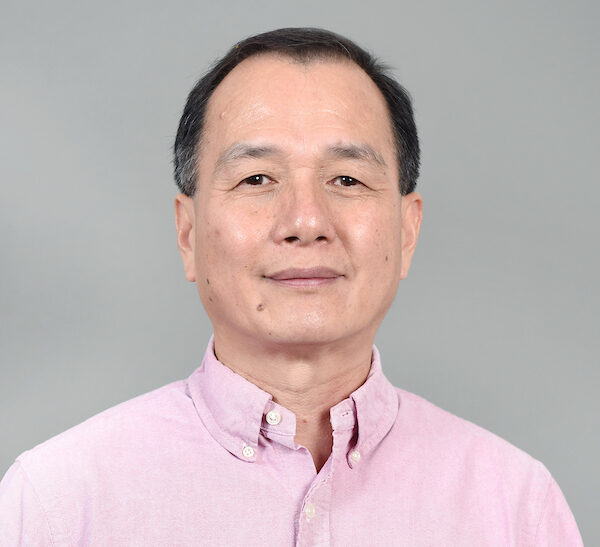
Prof. Meng Tao, Arizona State University
Prof. Meng Tao’s research focuses on terawatt-scale solar technologies with the goal of pushing solar energy into a mainstream energy source by 2035. It covers a wide range of topics from materials and devices to systems and applications. Current research projects include recycling technologies for solar panels, solar systems for electrolytic hydrogen production and electric vehicle charging, and electrolytic purification for solar-grade silicon. For the last two decades, he has been promoting solar energy at the state, federal, and global levels including the initiation and launch of the US Photovoltaic Manufacturing Consortium in 2011 and the Global Hydrogen Production Technologies Center in 2023. Prof. Tao was awarded the Fulbright Distinguished Chair in Alternative Energy Technology and was invited to the 2017 Nobel Award Ceremony in Stockholm.